


The Greece Golden Visa citizenship path is not direct citizenship by investment.
Buying property or making another qualifying investment can provide Greek residence. It does not provide a Greek passport.
For investors, the Greece Golden Visa can be the starting point. Citizenship comes later through naturalization.
That distinction matters.
A Golden Visa can be maintained without relocating to Greece. Citizenship is different. Most applicants need seven years of continuous legal residence. They must also show Greek language knowledge and genuine integration into the country.
In simple terms, Greece offers residency without relocation.
But the Greece Golden Visa citizenship route requires much more than holding that residence permit passively.
The Golden Visa gives qualifying non-EU investors the right to reside in Greece.
It is not a citizenship program.
A Golden Visa investor who later wants Greek citizenship normally needs to qualify through the country’s standard naturalization process.
For most applicants, the route looks like this:
Investment → Golden Visa → Genuine residence → Naturalization → Citizenship
This creates two separate decisions.
First, how to obtain and maintain Greek residence.
Second, whether to build the type of life in Greece that can later support citizenship.
That second decision is where many investors misunderstand the program.
For most non-EU investors:
The residence permit and citizenship process should therefore be planned separately.
Greek nationality can be acquired through several legal routes.
Citizenship by descent applies to people who qualify through Greek ancestry. The exact procedure depends on the family line and supporting civil records.
Naturalization by residence is the main route for foreign residents without Greek ancestry. This is the route most relevant to Golden Visa investors.
Certain applicants can qualify under shorter residence periods.
For example, a spouse of a Greek citizen who also has a child with that Greek spouse may qualify under different rules.
Marriage alone does not automatically provide Greek citizenship.
For investors without Greek ancestry, naturalization remains the relevant route.
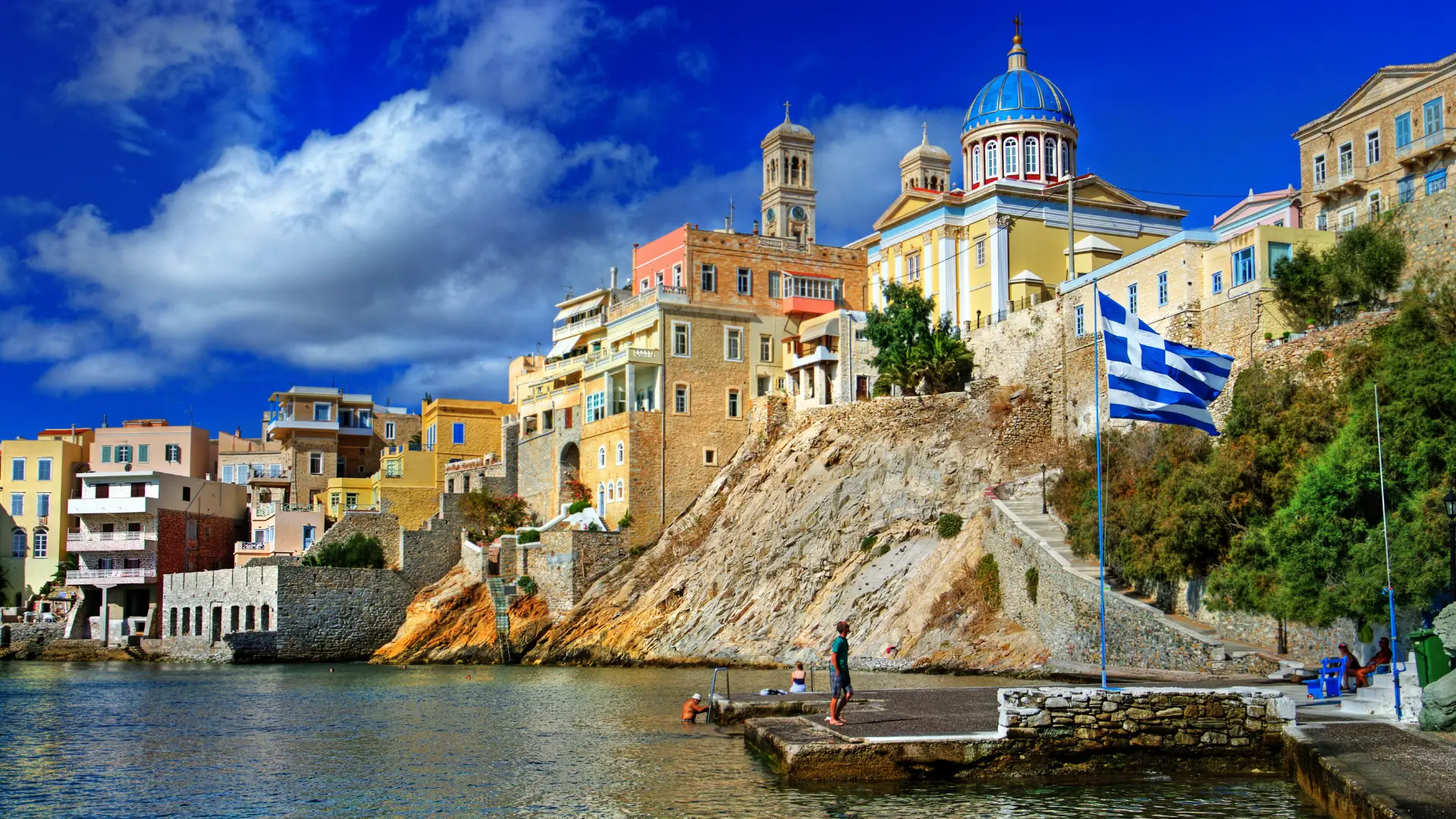
Greece offers several investment routes that can lead to residence.
The rules vary significantly by investment type.
| Investment route | Minimum investment |
|---|---|
| Property converted to residential use | €250,000 |
| Qualifying listed building | €250,000 |
| Standard property outside higher-threshold zones | €400,000 |
| Property in Attica, Thessaloniki and other designated areas | €800,000 |
| Qualifying investment funds | €350,000 |
| Certain company, bond or deposit routes | From €500,000 |
| Certain listed securities | €800,000 |
| Qualifying startup investment | €250,000 |
The investment route matters for more than the entry price.
It can affect rental strategy, liquidity, resale potential, risk, and how actively the investor becomes involved in Greece.
For someone pursuing Greece Golden Visa citizenship, that final point can become particularly important.
The €250,000 property route is often misunderstood.
It is not a general low-cost Golden Visa property threshold.
One route applies when a qualifying commercial or other non-residential property is legally converted to residential use.
The conversion must meet the applicable legal conditions. It must also be completed before the Golden Visa application.
Unlike the standard €400,000 and €800,000 property routes, this €250,000 conversion category does not carry the same 120-square-metre minimum.
A separate €250,000 option applies to qualifying listed buildings that require restoration or reconstruction.
This creates an important distinction.
A €250,000 property and a €400,000 property are not simply cheaper and more expensive versions of the same investment.
Their legal structure is different.
The €250,000 route also creates an issue that investors should consider before buying.
Under the current rules and 2026 clarification, the special Golden Visa treatment attached to a qualifying converted or restored property can only be used once.
If that property has already supported a Golden Visa under the special €250,000 category, a future third-country buyer cannot simply reuse the same property to obtain another €250,000 Golden Visa.
The property can still be sold.
But the future buyer pool may be different.
This changes the investment calculation.
A lower entry price is attractive. Exit flexibility also has value.
Investors should therefore consider two separate questions:
Does this property qualify when I buy it?
How attractive will it be when I eventually sell it?
Golden Visa eligibility at entry and resale liquidity are not the same thing.

For standard real estate, the Golden Visa threshold is generally €800,000 in higher-demand areas.
These include Attica, the Regional Unit of Thessaloniki, Mykonos, Santorini, and certain larger islands.
The minimum is generally €400,000 elsewhere in Greece.
These routes normally require the investment to be made in one property with at least 120 square metres of main-use space.
Before committing, investors should therefore verify:
location, investment amount and qualifying floor area.
A property should not be accepted as “Golden Visa eligible” based only on marketing material.
Its legal and technical characteristics must support that claim.
Rental strategy has also changed.
Properties acquired under the current Golden Visa real estate framework cannot generally be placed on short-term rental platforms under Greece’s sharing-economy rules.
That makes a standard Airbnb-focused strategy unsuitable for these properties.
Long-term leasing remains possible.
The 2026 guidance also clarified that the restriction does not automatically prevent certain professional arrangements where property is leased or subleased to a tourism business under an appropriate commercial structure.
That distinction can matter for professionally managed hospitality investments.
The structure should be reviewed before purchase rather than assumed.

One example is Wyndham Residences Gerakini in Halkidiki.
The development includes 178 villas operated by SWOT Hospitality under the Wyndham Residences brand.
Each villa has approximately 120 square metres of internal space, plus external terraces and balconies.
The current price is €435,000.
Gerakini sits outside the €800,000 locations. The project is therefore positioned around the standard €400,000 property route rather than the special €250,000 conversion category.
The project documentation also includes a long-term hospitality management structure and scheduled rental payments.
Those commercial terms should still be assessed separately from Golden Visa eligibility.
A property can qualify for residence without automatically being the best investment.
Both decisions need to make sense.
Real estate is not the only option.
Greece also offers an investment residence route linked to qualifying startups.
A third-country national can invest at least €250,000 in a business registered in Greece’s National Startup Registry, subject to the applicable conditions.
The investor’s ownership or voting rights cannot exceed 33%.
The business must create at least two new jobs during the first year. The required employment level must then be maintained for at least five years.
This route will not suit someone looking for passive property investment.
But it creates an interesting alternative for founders and entrepreneurs.
Their investment, business activity, and economic presence in Greece can be connected.
For an investor considering the Greece Golden Visa citizenship path, that distinction deserves attention.
Once the qualifying investment is structured, the investor can apply for residence.
Property-based Golden Visa permits are generally valid for five years.
They can be renewed as long as the legal conditions continue to be met.
Eligible family members can also obtain residence.
This may include the spouse or qualifying partner, eligible children, and direct ascendants of the investor and spouse.
There is no minimum physical stay simply to maintain the Golden Visa.
That flexibility is one of the program’s strongest advantages.
It is also the source of one of its biggest citizenship misconceptions.
A Greece Golden Visa citizenship strategy effectively has two clocks.
The first is the Golden Visa clock.
The residence permit can remain valid even if the investor spends limited time in Greece, provided the investment and renewal conditions continue to be satisfied.
The second is the citizenship clock.
For most applicants, Greek naturalization law requires seven continuous years of legal residence before an application can be made.
But seven calendar years with a residence permit are not enough by themselves.
Greek authorities can also examine whether the applicant has integrated into the country’s economic and social life.
They can assess whether Greece has genuinely become the centre of the applicant’s life activities.
This is where passive Golden Visa ownership and a citizenship strategy begin to separate.
An investor should not assume:
“I owned Greek property for seven years, so I now qualify for a Greek passport.”
The residence permit satisfies one part of the journey.
It does not automatically satisfy the entire naturalization test.
Anyone whose real objective is citizenship should plan differently from someone who only wants a Golden Visa.
Naturalization authorities can assess economic and social integration.
Relevant factors can include economic activity, tax compliance, social insurance history, family connections, familiarity with Greek society, community participation, and other evidence of integration.
Tax records covering the relevant period also form part of the naturalization process.
This creates a practical lesson.
Do not wait until year seven to start thinking about citizenship.
A serious Greece Golden Visa citizenship strategy should begin much earlier.
If citizenship is the objective, the applicant should gradually build a genuine life in Greece.

A property Golden Visa does not generally provide unrestricted access to ordinary salaried employment in Greece.
An investor can still participate in business structures within the limits permitted by Greek law.
For example, the investor may be able to participate as a shareholder or through certain company roles.
This does not prevent naturalization.
But it creates another planning issue.
The immigration route used to secure residence and the evidence later used to show integration are not automatically the same thing.
An investor targeting citizenship should therefore think about residence, taxation, economic activity, language, and family life together.
Most naturalization applicants must obtain the Certificate of Knowledge Adequacy for Naturalization, known as PEGP.
The examination covers:
The language component is approximately B1 level.
The examination fee is currently €150.
Some applicants can qualify for an exemption based on specific education completed in Greek.
Investors should not treat PEGP as a formality.
In the April 2026 examination, 4,733 candidates were graded.
Only 2,809 passed.
That represents a 59.35% pass rate.
The Greek Ministry of Interior also scheduled the next 2026 PEGP examination for 15 November 2026.
For anyone pursuing Greece Golden Visa citizenship, language preparation should begin well before the naturalization application.
After satisfying the required residence period and other conditions, the applicant can apply for naturalization.
The file can include:
Authorities also conduct criminal, public-order, and security checks.
The standard naturalization application currently carries a €550 government fee for most applicants.
The application is then assessed against both the formal and substantive requirements.
The citizenship process is sometimes described as though every applicant must attend an integration interview.
That is not accurate.
An interview can be requested when authorities need additional evidence that the applicant has sufficiently integrated into Greek economic and social life.
It is better to view the interview as an additional assessment tool.
It is not necessarily an automatic stage for every applicant.
This makes the evidence built during the years before naturalization even more important.
Families should plan citizenship differently from Golden Visa residence.
This is one of the most overlooked parts of the Greece Golden Visa citizenship journey.
A child may qualify as a dependent under the family’s Golden Visa residence structure.
That does not mean the child’s future citizenship outcome remains automatically linked to the parent’s case forever.
Greek citizenship law considers the child’s circumstances when the parent becomes a citizen.
A child of a naturalized parent can acquire Greek citizenship without a separate naturalization process if, at the date of the parent’s oath, the child meets the applicable conditions.
These include being:
This means families should not ask only:
“How old is my child when we apply for the Golden Visa?”
They should also ask:
“How old will my child be when I actually become a Greek citizen?”
For families with teenage children, that can materially change the strategy.
I would call this the age-at-oath test.
It is a better way to think about family planning than looking only at the child’s age when the investment is made.
If naturalization is approved, the decision is published in the Government Gazette.
But publication itself is not the final moment of citizenship.
Greek citizenship is acquired when the applicant takes the Oath of Allegiance.
The oath must generally be completed within one year of publication of the naturalization decision.
After citizenship is acquired and the relevant registrations are completed, the new citizen can proceed with the Greek identity and passport process.
A Greek citizen also becomes a citizen of the European Union.
The phrase “Greek citizenship after seven years” can be misleading.
Seven years is generally the minimum continuous legal residence period before a standard naturalization application can be submitted.
It is not a guaranteed passport timeline.
The applicant must still meet the language, integration, tax, criminal, and security requirements.
The citizenship application then needs to be processed.
The oath follows approval.
So the more accurate description of the Greece Golden Visa citizenship timeline is:
Eligibility for naturalization can begin after seven years for a qualifying applicant.
That is very different from promising a Greek passport exactly seven years after buying property.
Greece’s National Housing Strategy 2026–2035 has introduced another development worth watching.
The government has approved a policy proposal for a new Golden Visa category connected to long-term residential rental.
The proposed structure could allow investment across more than one property instead of relying on the current single-property structure.
In return, those properties would need to be committed to the long-term rental market.
This is not yet an operational Golden Visa investment route.
Important details still require implementing rules.
These include the minimum investment, permitted number of properties, and exact rental conditions.
Investors should therefore not structure a transaction around the proposal yet.
But the policy direction is important.
The bigger story is not simply that Greece may create another Golden Visa category.
The program is increasingly being connected to the country’s housing strategy.
The €250,000 conversion route encourages unused commercial properties to become housing.
Current Golden Visa properties face restrictions on short-term platform rentals.
The proposed portfolio route would direct investment into long-term residential supply.
These measures point in the same direction.
Greece is moving away from a system focused only on how much foreign investors spend.
Policy is increasingly looking at what that investment contributes to the country.
That matters for future investors.
The most attractive Golden Visa property may not always be the asset with the strongest tourism story.
Its legal use, rental model, resale potential, and alignment with future housing policy may matter just as much.
That is particularly relevant when the investment forms part of a long-term Greece Golden Visa citizenship strategy rather than a short-term property purchase.
No.
A qualifying investment can provide residence.
Greek citizenship requires a separate naturalization process.
There is no direct citizenship by investment program simply because someone purchases Greek property.
Generally yes if the objective is only to maintain a qualifying Golden Visa.
The Golden Visa itself does not carry a minimum physical stay requirement.
Citizenship is different.
Passive property ownership is unlikely to demonstrate the same connection to Greece as genuine residence and integration.
Only for specific qualifying routes.
The €250,000 property threshold applies to defined categories, including certain conversions and listed buildings.
It does not apply to every property priced above €250,000.
Current Golden Visa property rules restrict short-term platform rentals for relevant properties.
An investor should therefore confirm the intended rental structure before purchasing.
Not simply because someone holds a Golden Visa.
PEGP forms part of the standard naturalization process unless the applicant qualifies for a legal exemption.
Not necessarily.
Authorities can request an interview when further evidence of economic or social integration is needed.
No.
Seven years is generally the minimum legal residence period before a standard naturalization application.
Citizenship approval is separate.
All other legal requirements must still be satisfied.
No.
There is no direct Greek citizenship by investment route where an investment itself purchases citizenship.
The Greece Golden Visa to citizenship journey works through residence followed by naturalization.
That difference should be understood before investing.
The answer depends on the objective.
For someone who wants European residency without relocating, the Greece Golden Visa can work as a long-term residence solution by itself.
For someone who wants Greek and EU citizenship, the strategy is different.
That person should be prepared to build genuine residence in Greece.
They should also plan for the language requirement, tax footprint, social integration, and naturalization process.
The investment still matters.
But once the residence permit is issued, the Greece Golden Visa citizenship journey becomes much less about the property.
It becomes much more about the person.
That is the distinction investors should understand before choosing Greece.
The Greece Golden Visa can provide a strong European residence option.
But the right investment depends on more than the advertised threshold.
Property type, legal use, rental structure, resale plans, family timing, and citizenship goals can all change the recommendation.
Citizenship Invest has supported investors and families from more than 85 countries with residency and citizenship planning.
Contact our advisors for a confidential assessment of the Greece Golden Visa and the route that best fits your long-term plans.