

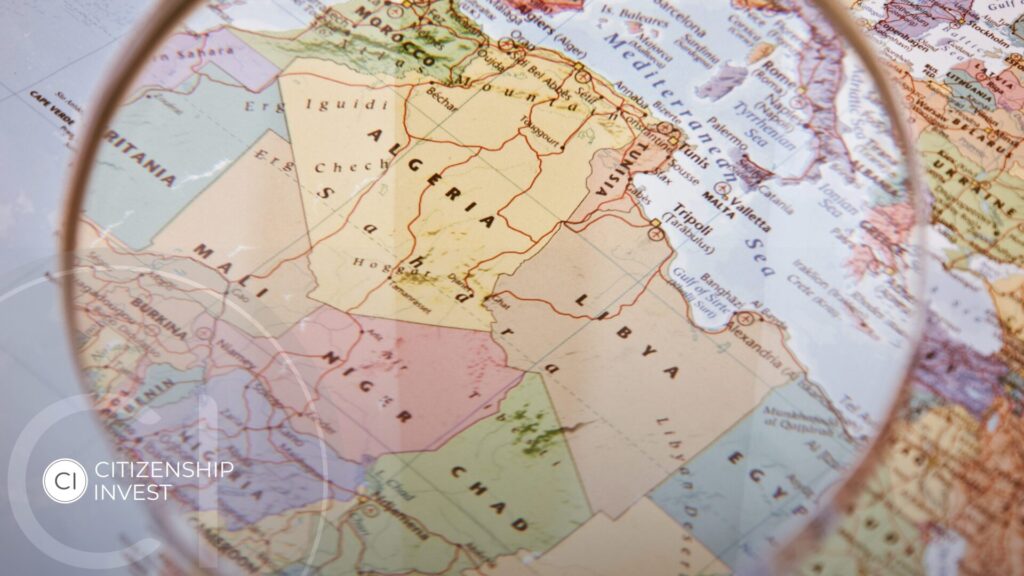
North Africa boasts rich natural resources. It also has a rapidly growing population of entrepreneurs. Wealth is accumulating steadily. Energy, agriculture, manufacturing, and tech innovation all play a role. A new generation of business leaders and high-net-worth individuals is driving that potential. As these entrepreneurs expand beyond local markets, they seek global mobility. They seek financial security. They also seek international investment access. That is driving demand for second citizenship and residency-by-investment programmes.
In the region, fluctuating markets remain a challenge. Regulatory unpredictability remains a challenge. Limited visa-free travel remains a challenge too. Investors from Egypt, Algeria, Morocco, and Tunisia turn to these options for long-term security and stability. What once looked like a luxury is now emerging as a necessity. Many want to protect wealth. Many want a safer future for their families.
It is no surprise that Africa has seen a notable exodus of its wealthiest citizens over the past two decades. Of the 54 African-born billionaires globally, only 21 still reside on the continent. Egypt, in particular, is experiencing a wealth outflow. Cairo remains home to the most billionaires of any African city, with four billionaires and 30 centi-millionaires. It is also seeing a significant decline in its millionaire population. According to the 2024 Africa Wealth Report, Egypt has lost 22% of its millionaires since 2013. Algeria has seen a 25% decline over the same period. Morocco stands out as an exception. It has gained nearly one-third more millionaires. This trend underscores rising demand among North African elites for second citizenships. Many want to safeguard wealth and futures in a volatile region.
This growing trend reflects interrelated factors. Regional challenges matter. Global opportunities matter too. The main drivers are outlined below.
For many North Africans, second citizenship is a strategic move. It can safeguard wealth from regional economic instability. It can open more secure financial systems. It can open international banking. It can also open investment-friendly environments that support long-term wealth preservation.
Investors from Algeria, Morocco, Libya, and Tunisia increasingly choose a second passport. It can remove bureaucratic roadblocks. It can support smoother business setup. It can ease entry into new markets. It can also support cross-border partnerships. That unlocks global commercial opportunities.
Many North African passports offer limited visa-free travel. Second citizenship opens greater freedom of movement. Visa-free or visa-on-arrival access can cover over 120 countries. For instance, a Grenadian passport grants access to over 150 destinations. That includes the UK, EU, and key Asian markets like China. Business travel and leisure become easier.
Families prioritising their children’s futures look to citizenship-by-investment programs. These can offer access to top-tier schools. They can also offer access to advanced medical systems. That supports a better standard of living. It supports healthier lifestyles. It also supports competitive educational prospects abroad.
CBI programmes often come with attractive tax policies. High-net-worth individuals in North Africa can benefit from low or zero tax rates on foreign income, wealth, inheritance, and capital gains. That can help them protect and grow assets with greater financial privacy, within the law.
A second passport can offer peace of mind. The region can face political shifts, civil unrest, or economic downturns. Those risks are, unfortunately, not uncommon. A second passport can serve as a contingency plan. It can enable swift relocation in a crisis. It can also support long-term family security.
These factors continue to push North African investors to look elsewhere. Caribbean citizenship-by-investment (CBI) programmes are emerging as favoured options. St. Kitts & Nevis, St. Lucia, Grenada, Antigua and Dominica are among them. Affordability, flexibility, and long-term benefits drive interest. These programmes provide a pathway to second citizenship through investments and government contributions. They grant visa-free or visa-on-arrival access to over 140 countries. That includes the UK and Schengen Area. Costs start from USD 200,000. Application processes are typically completed within four to six months. The absence of residency requirements further enhances their appeal.
The popularity of these programmes shows in rising application numbers. For instance, St. Lucia’s CBI programme experienced a 1,520% increase in applications. The average was 252 annually between 2015 and 2022. Applications reached 4,076 in 2023. Caribbean CBI programmes have collectively issued over 100,000 passports since 2014. That underscores their place in the global investment landscape.
However, your needs and goals may point to other residency or citizenship options. At Citizenship Invest, we draw on years of experience. We help clients navigate an ever-evolving global landscape. Connect with our experts today. Take the first step toward securing your wealth and future—quickly, confidently, and with trusted guidance.