


In today’s interconnected world, the power of your passport not only determines your ease of travel. It can also determine your professional future. This is because passports are subject to the shifting tides of global geopolitics. Whether we like it or not, the individuals carrying them are equally vulnerable to these changes.
This volatility has affected even the world’s strongest travel documents. As of October 2025, the U.S. passport has fallen to its lowest ranking in history. That signals the waning dominance of traditional Western powerhouses. The United Kingdom and the United States now rank 8th and 9th. That is a significant decline from their former top positions in 2015 and 2014. In contrast, the United Arab Emirates continues its extraordinary rise. It has climbed 34 places in a decade to reach 1st place. China has advanced to 53rd, despite not yet securing Schengen access. On the other end of the spectrum, Venezuela recorded the steepest drop, falling 15 places. Vanuatu, the UK, and Canada followed. That underscores the increasingly dynamic and unpredictable nature of global mobility.
Asian nations continue to dominate global passport rankings. Singapore retains its top spot. It grants visa-free access to 106 destinations worldwide, the most of any country. Close behind, Japan and South Korea share second place with access to 190 destinations. Europe remains well represented. Seven EU nations, including France, Germany, and Italy, hold joint third. Austria, Portugal, and Sweden tie for fourth. New Zealand, alongside Greece and Switzerland, rounds out the top five. At the other end of the spectrum, Afghanistan remains the world’s least powerful passport. It offers access to only 25 destinations. That reflects a mobility gap of 168 destinations between the highest and lowest ranked nations.
Today, 70% of global destinations are accessible visa-free to top-ranked passport holders. That compares to 20% for the least powerful. The gap reflects economic disparities. High-income nations hold 80% of the top 20 passports.

Nevertheless, travel continues to be both normalized and necessary. According to IATA, global air travel demand rose 5.8% in early 2025. That underscores the growing importance of mobility. Traditional powerful passport leaders are losing ground in an increasingly multipolar world. This is why passport rankings are increasingly seen as “hidden career accelerators or killers”. Business travel drives $2.4 trillion annually in the global economy.
More than ever, companies now value employees who can travel, network, and relocate without bureaucratic delays. That makes “passport efficiency” a real factor in corporate mobility and hiring. According to McKinsey & Company, visa restrictions cost global businesses $95 billion a year. That stems from lost deals (42%), limited talent access (31%), and legal or compliance costs (18%). Major consulting firms such as Deloitte, PwC, and BCG openly favor professionals with stronger passport power. Mobility directly impacts client engagement and revenue generation.
For instance, a Singaporean consultant, with access to 193 visa-free destinations, can generate up to 40% more international revenue than a peer from a lower-ranked passport country. That can be true even with the same level of experience, expertise, and capabilities. This growing divide is fueling the $17.3 billion investment migration industry. Business leaders increasingly pursue secondary citizenships not for status. They pursue them for strategic freedom and global competitiveness.
Entrepreneurs and executives from countries with limited passports often face delays in securing visas. That reduces their ability to close deals or attend international meetings on short notice.

Citizenship and residency by investment programs empower individuals from countries with limited mobility. They help secure global access through investment. By contributing to a host nation, applicants gain either permanent residency or full citizenship rights. Contributions may be through real estate, government bonds, or development funds.
The Caribbean remains a global leader in the Citizenship by Investment (CBI) field. It offers trusted and efficient programs that combine global mobility, family inclusion, and strong investment options. Among the most reputable, St. Kitts & Nevis provides visa-free access to 155 destinations. Destinations include the Schengen Area, UK, Singapore, and Hong Kong. Routes include a donation starting from USD 250,000 or a real estate investment. With an average six-month processing time, the program extends eligibility to spouses, children up to 25, and parents over 55. It issues passports valid for 10 years.
Similarly, Saint Lucia offers one of the region’s fastest processing times (just 3/4 months). It offers access to 146 destinations. Investment options start from USD 240,000 via donations, real estate, or government bonds.
Grenada stands out as the only Caribbean nation granting visa-free access to China. It also covers the Schengen Area, the UK, and Singapore. Its program, processed within six months, allows citizenship through a donation to the National Transformation Fund. Real estate investment starting from USD 235,000 is another route. Coverage includes spouses, children under 30, parents over 55, and siblings 18 and above. Collectively, these Caribbean programs represent secure, reputable, and family-oriented pathways to global citizenship. Investors gain not just mobility. They also gain long-term security and intergenerational opportunity.
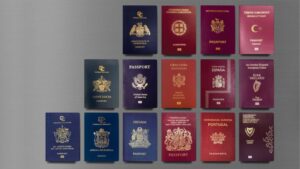
Europe’s residency-by-investment programs, such as those in Portugal, Greece, and Italy, offer investors and their families the right to live, study, and work locally. They also enjoy visa-free access across all 29 Schengen states. That equates to travel freedom across over 180 destinations worldwide. These programs not only provide immediate lifestyle and mobility advantages. They can also serve as a pathway to full EU citizenship. That further expands long-term rights and opportunities. Portugal’s Golden Visa remains one of the most sought-after. Approvals take 8–10 months. Visa-free access covers 33 European countries. The minimum capital transfer investment is €200,000. The program extends to spouses and children under 18, as well as dependent adult children and parents. Citizenship eligibility comes after five years without relocation required.
Similarly, the Greek Golden Visa, launched in 2013, grants a five-year renewable residence permit. It works through a real estate investment starting at €250,000. Applicants benefit from visa-free travel within the Schengen Zone. They can include spouses, children under 21, and even parents or in-laws. Meanwhile, Italy’s Investor Visa, introduced in 2017, enables non-EU nationals to gain residency within 2–3 months. That requires an investment of at least €250,000 in a start-up or joint-stock company. The visa is valid for two years, renewable for three. Permanent residency comes after five years. Citizenship comes after ten.
Nations such as Turkey and the United Arab Emirates are rapidly emerging as strong contenders in the investment migration landscape. They are strengthening their international reach and influence. The Turkish Citizenship by Investment Program, launched in 2017, offers a streamlined route to citizenship. It also offers an irrevocable Turkish passport. It does not require residency or the renunciation of existing nationality. With visa-free access to over 111 destinations, including Japan, South Korea, and Singapore, and a processing time of 2–5 months, the program attracts investors seeking both mobility and security. Applicants can qualify through a real estate investment of USD 400,000. Eligibility extends to spouses and children under 18. Passports are valid for 10 years for adults and 5 years for minors.
Meanwhile, the UAE has solidified its position as a global hub. It ranks among the world’s top 20 passports. It offers visa-free access to more than 180 destinations. Through its Golden Visa program, the UAE continues to attract high-net-worth individuals, entrepreneurs, and skilled professionals. They seek stability, opportunity, and a tax-friendly environment. For governments, these programs generate significant foreign direct investment and development funding. For individuals, they bridge the global mobility gap. They transform limited passports into powerful tools for opportunity, security, and international freedom.
Indeed, a second citizenship is more than a lifestyle upgrade. It’s an undeniable professional advantage. For entrepreneurs, executives, and global talent, enhanced mobility enables unrestricted access to new markets and new prospects. Reach out to Citizenship Invest today to explore the program best suited to your aspirations. Unlock a future defined by freedom, growth, and global opportunity.