

For high-net-worth individuals in Iran, pursuing global mobility is more critical than ever. So are long-term security and access to international opportunities. According to OECD data, Iran recorded the fastest global migration growth between 2020 and 2021. Migrant numbers surged from 48,000 to 115,000. That is a 141% increase. Migration data reflects a growing trend across all segments of society. Many want to build a future beyond Iran’s borders. This includes among the youth. According to the Iran Migration Observatory’s 2022 report, Iran ranked 17th globally for the number of individuals seeking education abroad. A recent Khorasan report found that 67% of university graduates are willing to emigrate.
Today, estimates of the Iranian diaspora range from four to ten million people. That reflects a significant outflow of talent and capital. Turkey has emerged as a key destination. Iranians led real estate investment there. They also established 1,661 companies between 2020 and 2021. That is a clear sign of accelerating elite migration. Iranians increasingly turn to countries like the United States, the United Kingdom, Canada, Australia, and Germany. They seek stability and opportunity. In 2011, Iranians were reported to have invested nearly $400 billion in the United States. That was almost equal to Iran’s GDP. It highlights the vast economic potential of this migrant community.
However, the geopolitical situation creates barriers. So does the state of their current passport. Opportunities beyond their borders feel out of reach for many. As of 2025, the Iranian passport ranks 173rd out of 199 countries. That makes it one of the least powerful travel documents globally. Iranian passport holders have visa-free access to just 21 countries.
Some of the countries Iranian citizens can enter without a visa include:
Iranian nationals also have visa on arrival to just 24 countries. They have eVisa access in 30 countries. They require a visa to enter 149 countries. That includes Europe, North America, and East Asia. With a passport score of 16.14 out of 100, Iranians have unrestricted access to only about 10.55% of the world.
Unsurprisingly, an increasing number of Iranian nationals are turning to Golden Visa and Citizenship by Investment (CBI) programmes. They seek a more stable future for their families. They also seek world-class healthcare and education. International business opportunities matter too.
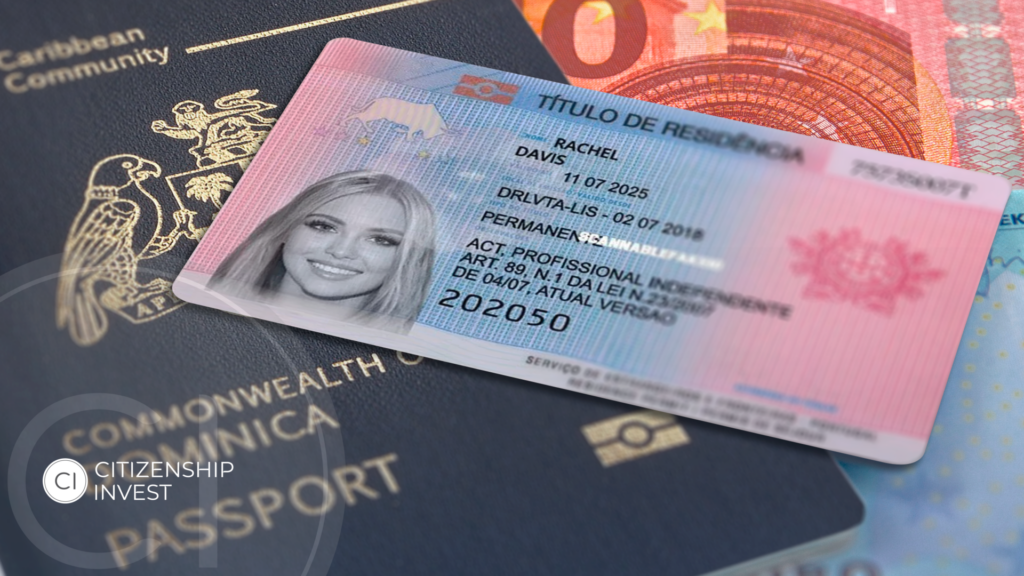
However, understanding the differences between these two options is crucial. It helps select the one that best aligns with personal and professional goals. A Golden Visa is a residency-by-investment programme. It grants temporary or permanent residence in return for a qualifying investment. That is usually in real estate, business, or government bonds. The minimum is often EUR 250,000. It often provides the right to live, work, and study in the host country. Most Golden Visa schemes still require several years of physical residency and integration. Only then can applicants apply for full citizenship.
In contrast, CBI programmes can offer full citizenship in as little as 4 to 6 months. There are usually no physical residency requirements. Costs start from USD 130,000. These programmes typically allow investors to include spouses and children in a single application. Sometimes parents can be included too. That provides immediate security for the entire family.
Moreover, CBI programmes offer passports with visa-free or visa-on-arrival access to over 140 countries. That includes the Schengen Area, the UK, and much of the Asia-Pacific region. That is a major advantage for Iranian nationals. They currently face significant travel restrictions.
Each option offers clear advantages. For Iranian nationals, choosing the correct route requires careful consideration of:
This is because the shifting political climate has continued to pose challenges for Iranian citizens. That is particularly true when accessing residency and citizenship-by-investment (CBI) programmes.
Despite the recent restrictions, Iranian nationals still have several options. They are still eligible to apply for RCBI schemes in some Caribbean countries, Portugal, and Turkey. Conditions vary.
Antigua and Barbuda does not impose broad restrictions beyond those on Russian applicants. It does maintain partial limitations. These apply to individuals born in Afghanistan, Iran, North Korea, Somalia, Yemen, and Sudan. Exceptions are possible, provided the applicant:
Antigua and Barbuda citizenship can be obtained through a government contribution of USD 230,000. It can also come through a real estate investment starting from USD 300,000.
Iran has also been classified as a “specified country” or region in Dominica. As a result, Iranian citizens or those domiciled in Iran can still apply for their program. They will be subjected to stringent enhanced due diligence procedures. Applicants from Iran should also note the applicable due diligence fees:
These are in addition to a government contribution or real estate investment of USD 200,000.
Turkey has a strategic location, business-friendly environment, and high quality of life. It has also become an increasingly attractive destination for Iranian nationals seeking new opportunities. The Turkish government offers multiple pathways for Iranians to obtain citizenship. That includes the popular Citizenship by Investment programme. Applicants can qualify through:
This has been a compelling option for Iranians seeking greater mobility and long-term security. Turkish citizenship offers visa-free or visa-on-arrival access to over 110 countries. It also offers access to European markets. Family members can be included. Dual nationality is allowed.
The Portugal Golden Visa remains one of the most attractive residency-by-investment programs in Europe. That is especially true for Iranian investors. They seek enhanced global mobility, security, and a pathway to EU citizenship. With a minimum investment starting from EUR 250,000, it offers:
Portugal also offers a stable economy and high quality of life. Critically, it has no nationality-based restrictions. That makes it one of the few EU residency programs still fully accessible to Iranian nationals.
A second passport can provide powerful advantages for Iranian investors. Benefits range from unrestricted travel and financial freedom to new educational and business opportunities. However, navigating the landscape is not always easy.
At Citizenship Invest, we provide tailored advice based on your nationality, background, and long-term aspirations. Whether your priority is global mobility, security, or generational planning, we can help you choose the best program.